

🧩 Module 3: Job Description
Before I begin with the module, let me state up front that this is one of the HR procedures that excites me most. It is, in my opinion, one of the most important procedures that we must pay the most attention to. Later, with all the descpritions, we can draft the "Job Manual" that will help in future HR processes.
Now, let's start with the development of the module.
📌 What is Job Description?
A job description is a document where we clearly detail:
- What tasks does a person perform in a specific role?
- Who they report to.
- What knowledge and skills are needed.
- The working conditions.
So, with the Job Description, our goal is to obtain the reality of the position, not the ideal of what it should be. For example, if we take the case of a Head of Administration, we will focus on understanding their tasks, such as managing the department's objectives or reporting administrative results to the CEO. The people he reports to or if he has staff under his supervision, the skills required for the position, such as leadership, communication skills, or others.
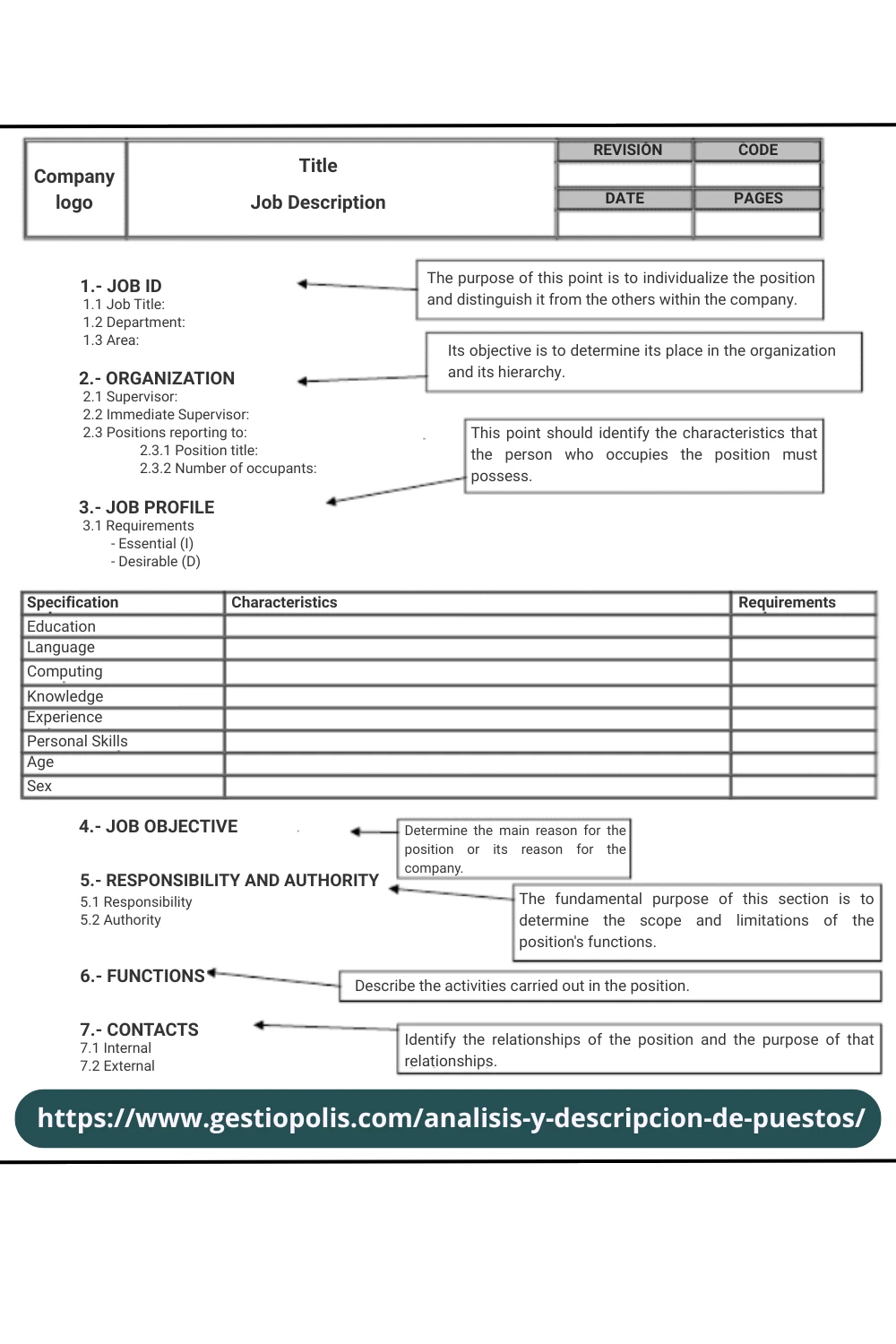
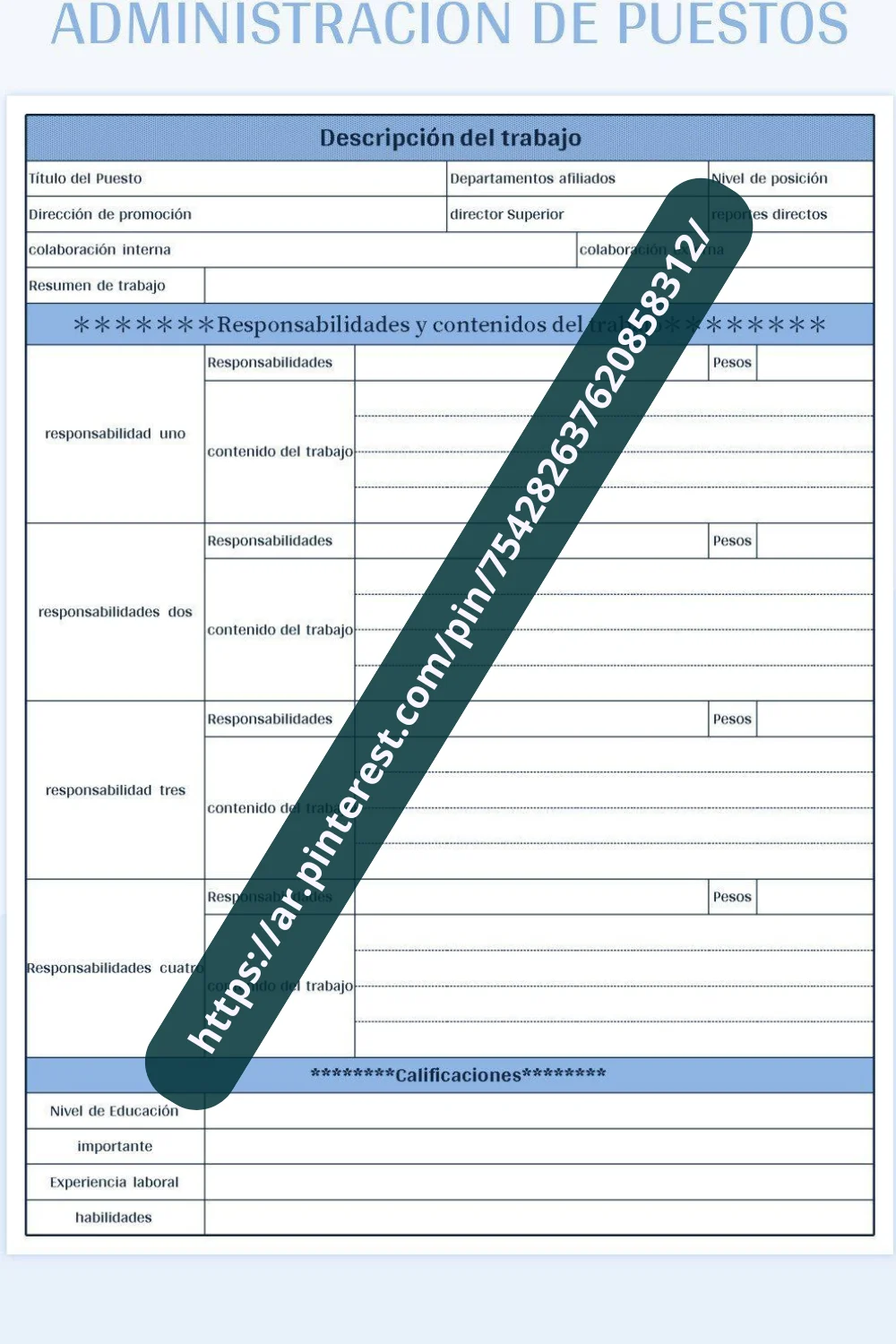
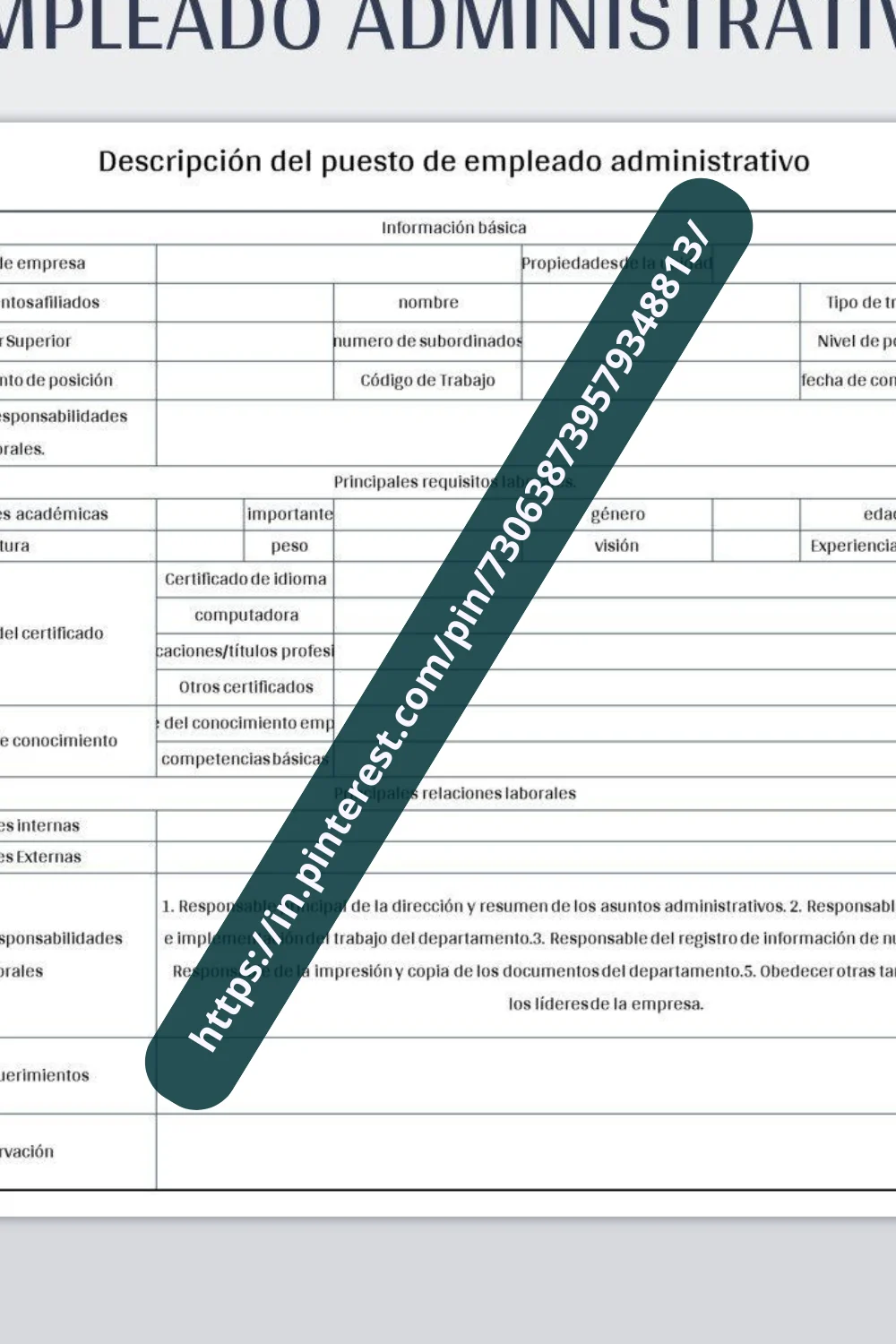
To construct our "Job Manual", we will carefully examine what information we can collect for the job descriptions and then combine everything.
📋 Why is so important?
Because the job description helps us to:
- Define the actual responsibilities.
- Avoid task duplication or overload.
- Establish objective criteria for selection or training.
- Provide clarity to the person holding the position.
- Promote professional growth within the organization.
- Align roles with the company's strategy.
As you can see, carrying out the task of creating job descriptions brings us great benefits, especially because we will have a better understanding of the work performed by the different positions in our company. This is why it is one of my favorite processes.
🧭 How do we prepare it?
Because we have created the organizational chart, now all the positions are identified, so now is a good time to start with the job description procedure.
Suggested steps:
- List all existing positions.
- Interview the people who occupy them (in person or with surveys).
- Analyze tasks, hierarchies, and necessary skills.
- Draft the complete description.
- Review and approve with the relevant parties.
- Save and update periodically.
🧾 What to include in the job description?
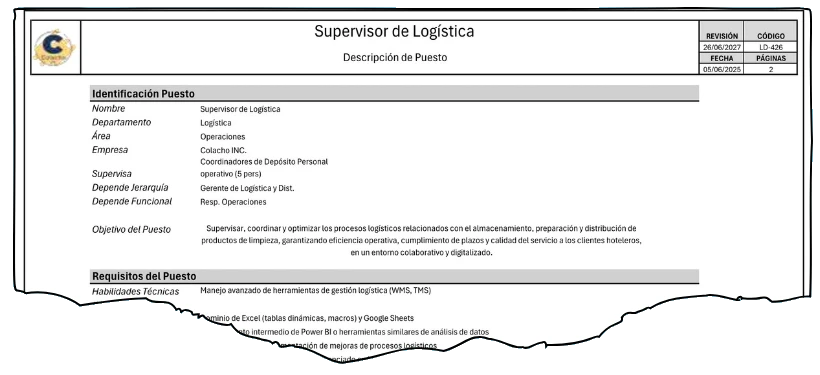
There is no unique template. The important thing is to create one that adapts to our company. I would like to share with you the most prevalent components (I will indicate with ⭐ the aspects that I believe are essential and that we must miss in the job description):
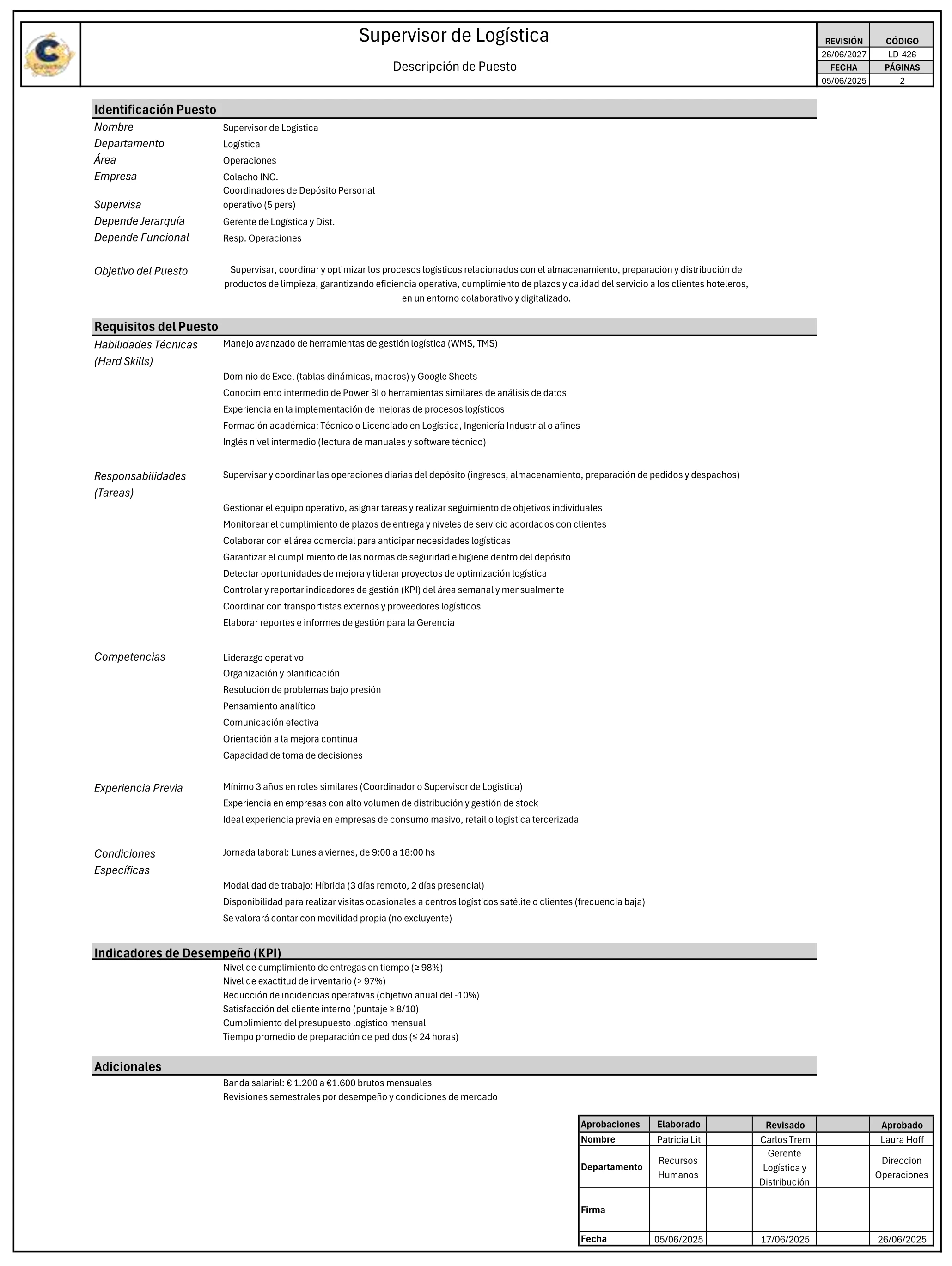
Header
-
⭐ Job Title
-
⭐ Department and area
-
Code or Job ID (In case you use a rgistration system)
-
Date created and last update
-
Company or parent company (if applicable)
The first two are essential for identifying the position and the location where it is found. Then, if we have identified our positions by an ID, it is convenient to use it. The creation date is relevant if we want to keep a record of when the position started functioning. The most recent update will allow us to remember if it has been a long time since we updated the responsibilities or requirements of the position. When the company is divided into several matrices, we naturally need to identify to which one each position belongs in order to avoid duplication of positions; a position may have different requirements or tasks from one matrix to another.
Hierarchy
-
⭐ Who they report to
-
⭐ Do they have staff to supervise?
-
Functional dependency (if applicable)
To make sure there are no discrepancies and that the levels of hierarchy are suitable, it is essential that we compare the organizational chart with the replies of the individual holding the job (that is convenient for the first two points). The term "functional dependency" describes whether a job depends on other departments to carry out its duties.
Job Objective
-
⭐ One or two lines that summarize the purpose of the position.
It is crucial that we detail the reason for the position, what its goal within the company is, and what is expected from the role. We understand the reason for being.
Technical Requirements
-
⭐ Required training
-
⭐ Previous experience
-
⭐ Necessary hard skills
-
⭐ Languages, certifications, etc.
The technical requirements will be better the more specific we write them. As a result, we will need to compare three things: the information provided by their superior, the information of the person currently holding the position, and the information that is thought to be required for the position. When we finish comparing the data, we will be able to design the technical criteria, which will act as filters throughout the selection process, allowing us to compare the candidates by their experience.
Job skills
-
⭐ Necessary soft skills (leadership, communication, organization, etc.)
Similar to the last point, the more specialized the soft skills, the better. Planning training programs later on will greatly benefit from it, particularly when internal mobility is implemented.
Tasks and Responsibilities
-
⭐ Clear and specific list of tasks
-
Differentiate between exclusive and shared tasks
Being specific about the tasks that each position must fulfill helps us avoid task duplication between different positions. People will have a clear understanding of what they are responsible for doing.
Job conditions
-
⭐ Work schedule, shifts, availability to travel, mobility, etc.
The job conditions clarify the working schedule and hours (whether in-person, remote, or hybrid), if they will work in shifts, whether travel is required, or the benefits that the company provides to the role. We will have fewer misunderstandings if the conditions are explicit.
Key Performance Indicators (KPI)
-
Metrics or expected results (if applicable)
If we evaluate performance or carry out any measurement regarding it, it is advisable to add the indicators that the position must achieve. It will make it easier to verify if the person in the position has achieved those objectives. Even if we only track a simple KPI, it is advisable to include it.
Additional (optional)
-
⭐ Salary range
-
⭐ Approval signatures: who created, reviewed, and approved the description
The salary range is optional; I prefer to include it, as it facilitates the creation of the job offer, but it also helps us in forming the scales of salary increases. Of course, including the people who participated in drafting the description helps when we need to reach out to someone to clarify any doubts that may arise about it.
🗂️Where do we store it?
You can use: Excel, Word, online forms (Notion, Canvas, Google Docs, etc.), or even develop it.
The important thing is that:
- ✔️ Be centralized.
- ✔️ Be easily accessible.
- ✔️ Have a regular update system
📚 To summarize
A good job description:
- Provides clarity to the organization and to each individual.
- Promotes internal mobility.
- It allows for the design of better selection and training processes.
- Aligns talent with strategy.
- Helps make fairer and more objective decisions.
🧠 Proposed Activity
👉 Exercise 1: What description does this company need?
Below are three fictitious companies. Your task is to analyze each one and suggest what type of job description structure would be most useful for organizing the work in each case.
🏢 Company A – Tech startup
- 8 people working.
- Mixed roles (for example, one person does design, customer service, and social media).
- High turnover and frequent changes.
- Poor documentation.
Questions:
- How would you organize the job description?
- Which aspects of the template do you find most important?
- What method would you use to collect the information?
🏪 Company B – Retail chain with 10 locations
- 130 employees in total.
- Each location has its own manager and team.
- There is a central administrative area.
Questions:
- Is it important for each job to have a description? Why?
- What information would you include in the job descriptions for store managers?
- How would you make it easier to update these descriptions?
🏭 Company C – Auto parts factory
- 300 employees.
- 3 rotating shifts.
- Highly standardized processes.
- There are line supervisors.
Questions:
- What challenges might arise when describing production line positions?
- What performance indicators would you include?
- How would you ensure that all supervisors carry out the same tasks/responsibilities?
👉 Exercise 2: Create your first organizational chart and job description!
Objective: Create a simple organizational chart and job description based on the following list.
Fictional context: Company "VerdeClaro", dedicated to sustainable design.
Roles:
- CEO
- Graphic designer
- Marketing Manager
- Production Manager
- Administrative Assistant
- Community Manager
Tasks:
- Draw an organizational chart that represents how these positions relate to each other.
- Choose one position and write its description. Don't forget to include: Job title | Area/department | Reporting authority | Job objective | Main duties | Requirements (training, skills, experience) | Working conditions.
🎯 You can do it on paper, Excel, Canva, Miro, or any tool you feel comfortable with.