

📌 Module 5: Onboarding

Okay, in the previous module, we ran the recruitment process, which allowed us to find the employees who will fill the positions we're offering. So, now it's time to welcome them to our company, and we'll do so through onboarding. Let's dive into the essential factors for a successful onboarding. 😉
What is Onboarding and why is so important?
Onboarding, also known as job induction, is the process by which we help new employees successfully integrate into our company.
Our main goal is to make the person feel welcome, supported, and safe, reducing the uncertainty that often accompanies starting a new job. Who hasn't felt nervous when starting a new job? 🫣
We must keep in mind that onboarding increases the engagement of new employees, accelerates adaptation, and helps us retain talent. Therefore, we must plan and establish a protocol to facilitate our work.
Keys to effective onboarding
Let's look at some points that will help us with the onboarding process.
-
Pre-planning:
Prepare a checklist with all the materials the worker will need before the first day (workspace, equipment, access, documentation, etc.).
Submit basic registration documentation before entry.
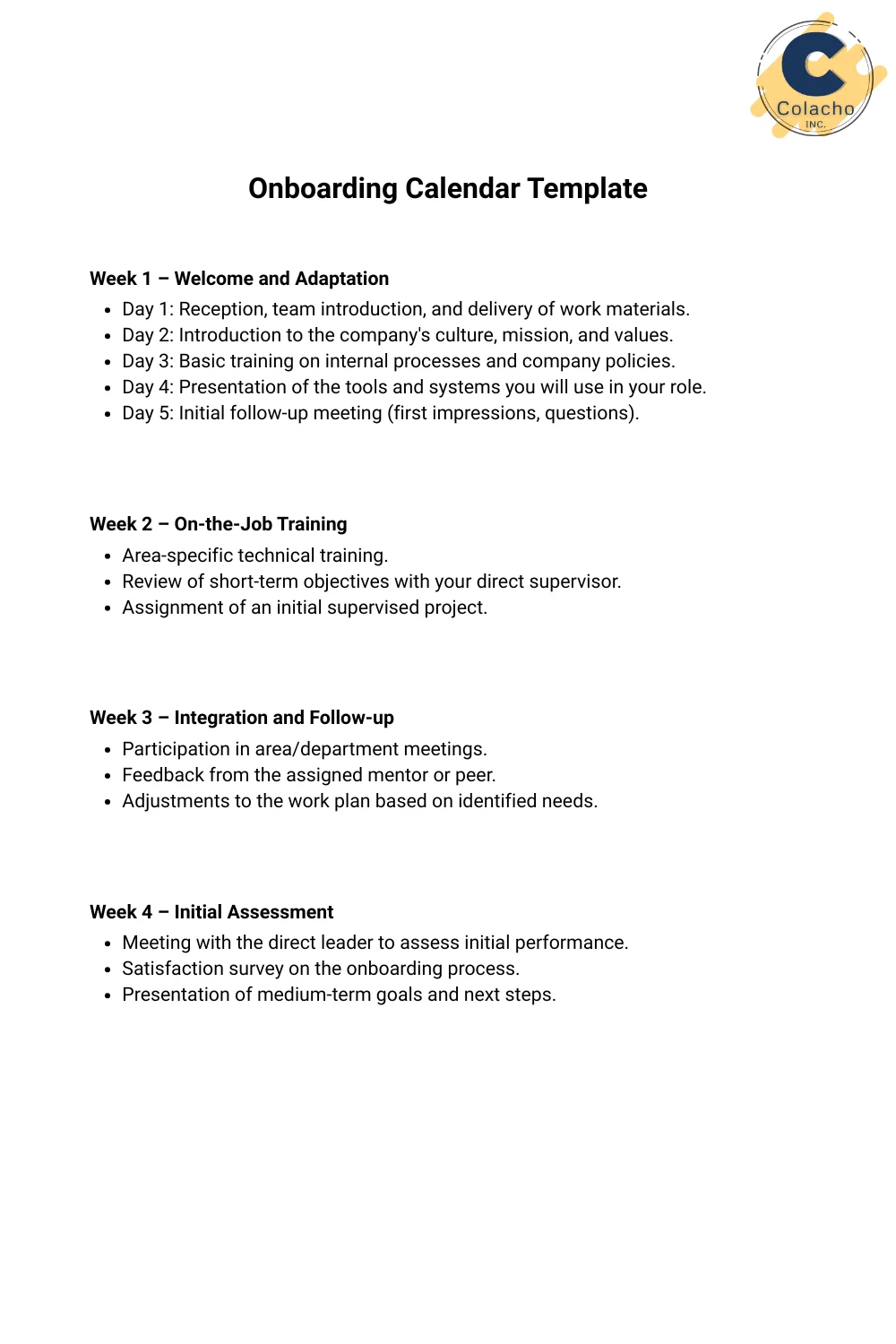
🧩 Tip: Keep a calendar with the dates and times of the presentations, as well as the deadlines to get everything you need for onboarding.
-
First impression:
As we occasionally said: "First impressions are what count."
It's important to welcome new employees with a friendly and professional attitude 🤝. We should be one of their first contacts upon arrival.
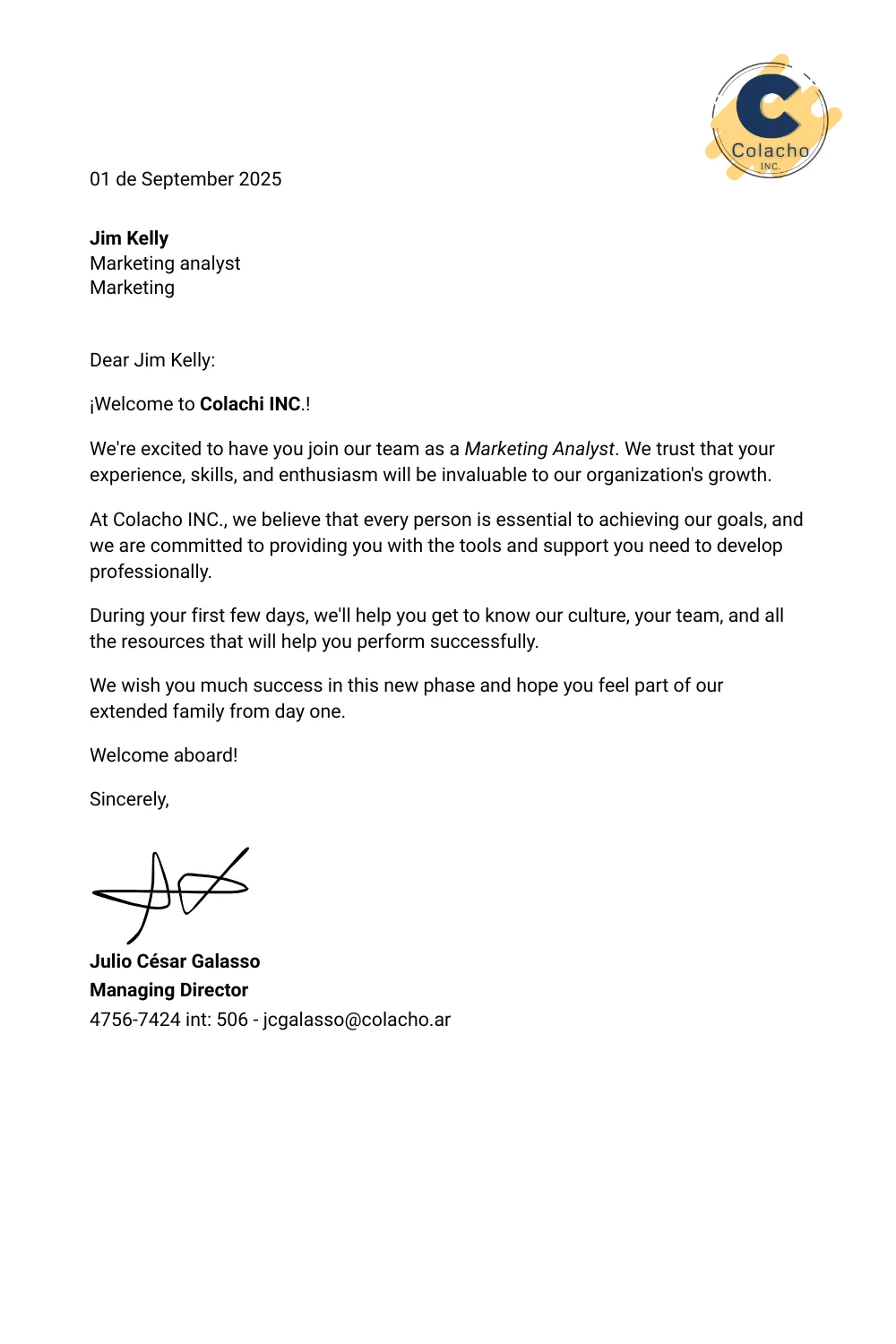
Provide a welcome letter signed by management, outlining the importance of their arrival and what is expected of them. A small detail that contributes to employee motivation.
Introduce them to your team and assign them a mentor in their field, who will guide them through the first few weeks. The mentor must have the skill and time to explain how the field works.
-
Transmission of information without saturation:
Deliver content (benefits, policies, regulations, safety, etc.) through an organized schedule.
Show the facilities (emergency exits, restrooms, common areas). We can do this ourselves or delegate the task to a mentor.
-
Integration into the company culture:
It is important not to forget to communicate the organization's values, mission and vision to the employee.
Promote employee identification with the brand and their role within the team.
-
Continuous monitoring:
Conduct feedback meetings during the first few months. Remember that it can take an employee between three and six months to adapt to the company's work routine. It's a good idea to provide them with a schedule of follow-up interviews from the outset.
Analyze their level of satisfaction and adaptation. This way, we can detect early if the person feels dissatisfied with their job or their sector.
To recap, periodically analyzing our onboarding process based on feedback will allow us to optimize it and make it as user-friendly as possible.
Benefits of a good Onboarding
- Increase staff retention.
- Improve the work environment.
- Increase productivity faster.
- Strengthens the employer brand image.
As we can see, implementing a well-planned onboarding plan focused on new employees is very beneficial for our organization. Therefore, we must define the methods and steps we will follow to achieve a successful onboarding.
🧠 Practical exercises
👉 Exercise 1 - Onboarding Planning:
Imagine that a new Marketing Analyst joins your company tomorrow.
- List 5 key actions you would take before and during their first day to ensure a good welcome.
- Briefly justify why each one is important.
👉 Exercise 2 - Process improvement:
Your company notices that several new employees leave before reaching 3 months.
- Identify 3 possible failures in the onboarding process that could be causing this.
- Propose a solution for each failure.